Heavy Fleet Fuel Monitoring in Australia: CANbus, Contactless EasyCAN & Custom CAN Explained
Fuel card statements tell you what you paid at the bowser — not where the diesel actually went. Here is how Australian transport, civil, mining, and agriculture fleets measure real fuel consumption across mixed gear using FMS/J1939, EasyCAN, BLE fuel sensors, Custom CAN, and CAN for ALL.
21 November 2026 · by Alex Stewart
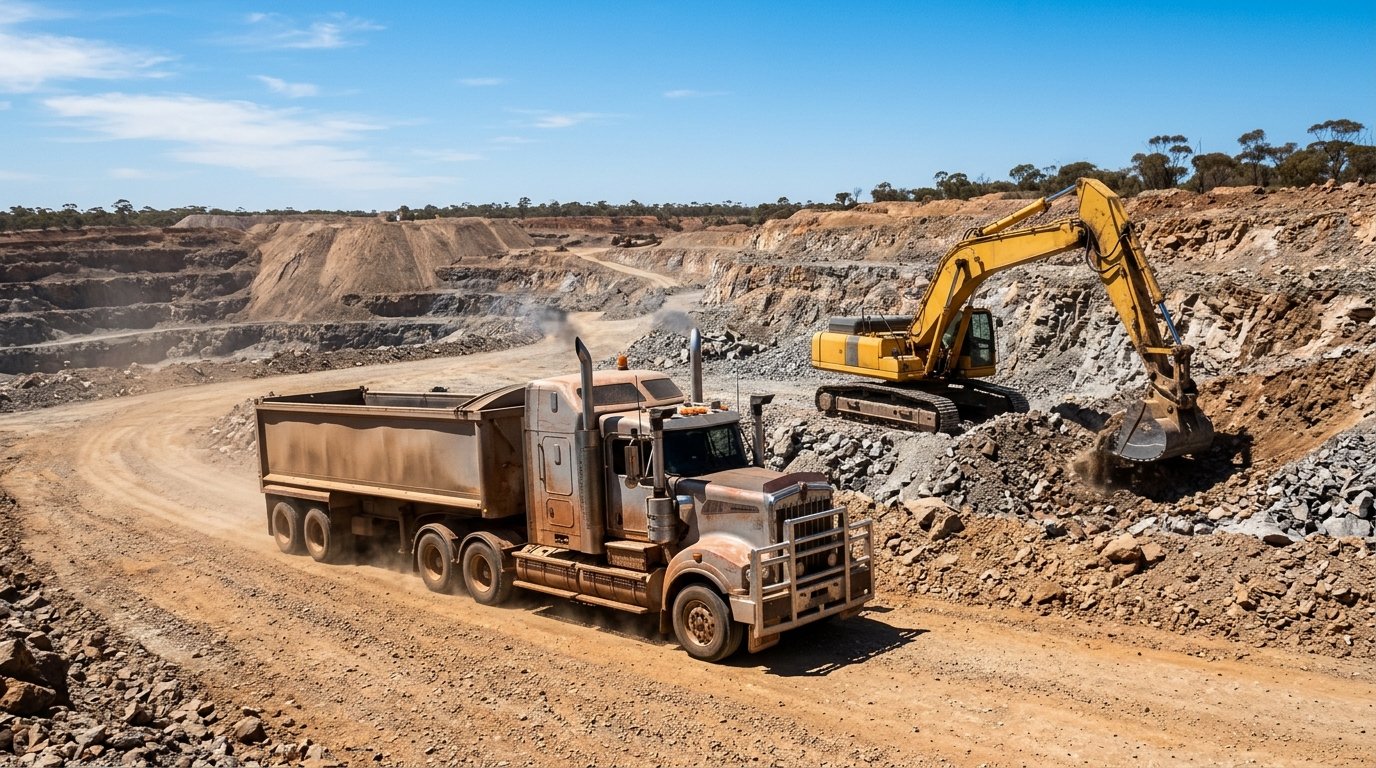
Diesel is usually the first or second largest operating line on a transport, civil, mining, or agricultural P&L — yet most fleets still manage it from monthly fuel-card invoices. A fuel card tells you how many litres were pumped into a rego number. It can't tell you whether 18% of that diesel burned at idle in the yard, whether a truck's injectors are pushing L/100km up month after month, or whether 120 litres were siphoned out of an excavator tank on Sunday night.
Real fleet fuel monitoring reads consumption and tank levels directly off the vehicle or machine. Because Australian fleets rarely run one uniform make and model, there isn't a single wiring trick that fits every asset — instead, Teletrack supports four proven fuel-reading methods plus Custom CAN and Remote CAN Logging for non-standard heavy machinery.
TL;DR
- Heavy trucks & prime movers: Read native FMS / J1939 fuel rate, total fuel used, AdBlue, and tank level via Ruptela HCV5 ($320), Pro5 ($280), or Smart5 ($200).
- Protect OEM wiring warranties: Use Ruptela's contactless EasyCAN adapter (POA) — clips around the CAN pair with zero wire stripping or splicing.
- High-theft tanks & older yellow plant: Fit a wireless Escort TD BLE fuel level sensor into the tank for precise refuel/drain alerts without running cable back to the cab.
- Mining, agriculture, forklifts & EVs: Use Custom CAN (Smart5 & HCV5) and Remote CAN Logging over cellular to decode proprietary OEM parameters without sending a technician to site.
- Already running compatible third-party trackers? Ruptela's compact CAN for ALL (CFA) bridge adds CAN data without ripping out existing hardware.
Four fuel-reading methods
Matching the fuel-monitoring method to each asset class
Trying to force one sensor method across prime movers, light utes, and 20-year-old excavators always fails. Match the capture method to what the machine already exposes:
1. Native FMS / J1939 CAN bus (trucks, buses & modern plant)
Most modern heavy trucks and buses expose standard FMS or SAE J1939 CAN streams reporting instantaneous fuel rate, cumulative fuel used, tank level, AdBlue level, engine hours, and idle time. Wiring a dual-CAN tracker like HCV5 or Pro5 (or Smart5) directly into the FMS interface gives clean, high-resolution consumption metrics inside Teletrack's Fuel Monitoring module.
2. Contactless EasyCAN (zero wire splicing)
New trucks, leased fleets, and dealer-warrantied tractors often prohibit cutting into factory CAN looms. Ruptela's EasyCAN contactless inductive reader (POA) clamps cleanly over the outside of the twisted CAN wire pair — reading vehicle fuel and engine signals passively without piercing insulation or risking OEM electrical warranty disputes.
3. OBD-II / LCV CAN (utes, vans & light commercial)
On light commercial fleets, Teltonika FMC003, Ruptela Plug5, and hardwired Ruptela LCV5 pull OEM fuel level, odometer, and idle metrics straight from the vehicle's diagnostic bus.
4. Wireless BLE tank probes (Escort TD BLE)
Factory dash fuel floats are notoriously coarse on older tippers, remote diesel generators, and yellow plant — and some machines don't report fuel level on CAN at all. Fitting a capacitive wireless sensor such as the Escort TD BLE directly into the tank pairs wirelessly via Bluetooth with Smart5, HCV5, Pro5, or LCV5, giving sharp litre-level visibility for refuel verification and sudden fuel-drain theft alerts.
Fuel monitoring comparison
Comparing the 4 Fleet Fuel Monitoring Approaches
| Feature | FMS / EasyCAN (Wired CAN) | Wireless BLE Probe (Escort TD BLE) | OBD-II / LCV CAN |
|---|---|---|---|
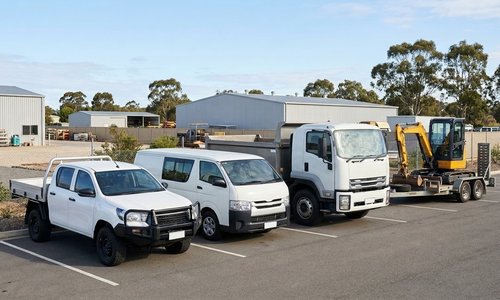
| Best asset types | Prime movers, rigids, buses, modern tractors & plant | High-theft tanks, older plant, generators, bulk tanks | Utes, delivery vans & company cars |
| Wire splicing required? | None with contactless EasyCAN or factory FMS plug | None to cab (tank mount + wireless BLE to tracker) | None on FMC003 / Plug5 (plug-in) |
| Engine burn vs tank theft | Exact fuel burn rate + idle litres + dash tank % | High-precision tank level, refuels & rapid drain alerts | OEM tank % + odometer + idle time |
| Recommended trackers | HCV5 ($320), Pro5 ($280), Smart5 ($200) | Smart5 ($200), HCV5 ($320), Pro5 ($280) | FMC003 ($250), Plug5 ($250), LCV5 ($250) |
Download the Ruptela Fuel Solution brochure
Review supported CAN interfaces, contactless EasyCAN installation, and external fuel sensor options in our self-hosted PDF brochure.
Beyond standard trucks
Custom CAN, Remote CAN Logging & CAN for ALL (CFA)
Standard FMS/J1939 covers highway trucks well, but Australian mining, agriculture, construction plant, forklifts, and electric vehicles frequently broadcast critical data on proprietary OEM CAN IDs. Three Ruptela capabilities on Teletrack close that gap cleanly:
- Custom CAN (Smart5 & HCV5): Configure custom CAN reading rules directly on the device to pull non-standard metrics — hydraulic pressure, PTO/implement engagement, forklift mast/load signals, or EV battery state of charge — without waiting for a generic firmware release. Download Custom CAN brochure (PDF).
- Remote CAN Logging & Reverse Engineering: Adding a new tractor, loader, or truck model to your fleet? HCV5, Pro5, LCV5, Smart5, and Plug5 can capture raw CAN bus frames remotely over cellular so new vehicle parameters can be reverse-engineered without flying a technician out to site. Download Remote CAN Logging brochure (PDF).
- CAN for ALL (CFA) Bridge: Already invested in compatible third-party GPS trackers that don't read deep CAN? Ruptela's compact 50 × 41 × 14 mm dual-CAN FD bridge (POA) feeds decoded vehicle CAN data into existing trackers over wired J1939/FMS or BLE — avoiding rip-and-replace on fleet migrations.
Turning data into savings
How fleets turn fuel telemetry into lower diesel bills
Collecting fuel data only pays back when it drives simple weekly actions:
- Cut excessive idling first: Separating PTO/working hours from dead idling shows exactly which sites, shifts, or vehicles are burning diesel while parked — normally the fastest zero-capex saving.
- Pair fuel metrics with the Driver Scorecard: Harsh acceleration, speeding, and excess idling show up side by side in Teletrack's Driver Scorecard so fleet managers coach specific habits instead of lecturing the whole depot.
- Catch mechanical drift early: Pairing fuel burn with CAN fault codes flags clogged DPFs, boost leaks, or injector issues before a breakdown or tow.
- Verify refuels & catch theft: Tank-level alerts on BLE probes flag unexpected drops outside operating hours and reconcile refuel volumes against fuel-card dockets.
When fitting CAN or fuel sensors, Teletrack supports both independent auto-electricians and in-house workshop self-installs — supplying installation diagrams, running an install-strategy meeting, and providing our live-feedback installation page so your installer verifies CAN signals immediately on site.
Fleet fuel monitoring & CANbus FAQs
Will installing a CANbus fuel tracker void our truck or tractor warranty?
Using a factory FMS interface or Ruptela's contactless EasyCAN adapter (which clips over the outside of the CAN wires with zero stripping or splicing) avoids cutting into OEM harnesses and protects factory wiring warranties.
Does every truck and machine report exact fuel level over CANbus?
No — available CAN parameters vary by make, model, and year. Teletrack confirms supported signals against your vehicle list before deployment, and uses Remote CAN Logging or wireless Escort TD BLE tank probes where a machine doesn't expose tank level on CAN.
Which tracker should we choose for fuel monitoring on heavy trucks vs plant?
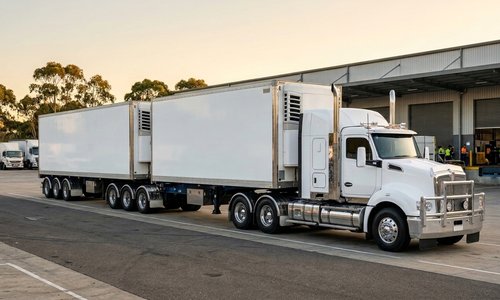
For rugged heavy plant, generators, and mixed fleets needing IP68 sealing and Custom CAN, choose the Ruptela Smart5 ($200 + GST). For prime movers, reefers, and heavy haulage needing dual CAN, Trailer CAN, or K-Line, choose the Pro5 ($280) or HCV5 ($320).
Can Teletrack detect fuel theft from excavators or parked trucks?
Yes — pairing a wireless fuel level probe (such as the Escort TD BLE) with a Ruptela tracker gives high-resolution tank readings and fires rapid-drop alerts if diesel is siphoned while the ignition is off.
Can we monitor fuel on our existing non-Ruptela trackers without replacing them?
Where your existing trackers support wired J1939/FMS or BLE input, Ruptela's compact CAN for ALL (CFA) bridge can feed vehicle CAN parameters into them without replacing the trackers. Talk to us during migration scoping to confirm compatibility.
Is fuel monitoring included in Teletrack's base monthly pricing?
Yes. Fuel monitoring, idling reports, driver scorecards, and CAN diagnostics sit on Teletrack's standard Track tier ($21.90 / asset / month + GST, month-to-month, AWS Sydney hosted). Hardware and optional EasyCAN / BLE probes are purchased upfront.
Check CAN & fuel compatibility for your fleet
Send us your list of makes and models — we'll confirm which assets read fuel straight off FMS/OBD/EasyCAN, where BLE probes make sense, and quote the exact hardware mix.