GPS tracking for mobile cranes: 2026 buying guide
What matters when choosing GPS tracking for mobile cranes in 2026 — J1939 CANBUS access for boom and fault data, PROSTART® pre-starts with immobilisation, geofencing for site moves — and which hardware handles crane-specific data instead of just a dot on a map.
14 August 2026 · by Alex Stewart
Mobile cranes get tracked like every other yellow-goods asset — until the boom swings over a live site and nobody can prove where the load went. Here's what actually matters when you're choosing GPS tracking for mobile cranes in 2026, and which hardware handles crane-specific data instead of just a dot on a map.
TL;DR
- Ruptela Smart5 is the primary GPS tracker to assess for mobile crane fleets — Buy.
- Teltonika FMC650 is a second wired tracker option for mixed crane and vehicle fleets — Consider.
- PROSTART® pre-starts and immobilisation add the safety control most crane trackers skip — Buy.
- Ruptela Asset5 is the battery-powered option for counterweights, outriggers and other unpowered gear — Consider.
- Consumer OBD dongles read light-vehicle data only and miss crane CANBUS entirely — Skip for plant.
Why this matters
A mobile crane isn't a ute with a bigger engine. It runs a CAN 2.0 / SAE J1939 network reporting boom angle, outrigger status, engine fault codes and load-moment data that a standard OBD tracker never sees. Bolt on a generic vehicle tracker and you get location — nothing about whether the slewing gearbox threw a fault code an hour before it failed.
Crane hire, civil and construction operators also carry a compliance layer most fleets don't: pre-start checks tied to Australian WHS obligations, and in most states a High Risk Work Licence requirement once a crane's rated capacity clears 10 tonnes. GPS tracking for mobile cranes that ignores this is only solving half the problem.
Who this is for
This guide is for fleet and plant managers running mobile cranes — 5-tonne pick-and-carry units through to 100-tonne all-terrain cranes — across crane hire, civil, construction and heavy transport in Australia. If you're managing a mixed fleet where cranes sit alongside dozer, excavator and truck assets, Teletrack is built around exactly that mix rather than crane-only tracking.
If your fleet is a handful of light commercial vehicles with no plant or CANBUS assets, most of the criteria below won't apply — you need a simpler vehicle-only tracker, not this list.
What to look for in GPS tracking for mobile cranes
CANBUS and J1939 read access
A crane's engine control unit, boom controller and stability system all talk over J1939. Tracking hardware that only reads OBD-II gives you speed and location; hardware that reads J1939 and CAN 2.0 gives you fault codes, engine hours and boom telemetry. For a 2026 crane fleet, this is the single biggest differentiator between a location pin and a diagnostics tool.
Pre-start checks and immobilisation
Cranes require documented pre-operation checks before every shift — outriggers, wire rope, hydraulic pressure, load charts. A platform that pairs digital pre-start with immobilisation stops an unchecked or defect-flagged crane from starting at all, rather than just logging that a check was skipped after the fact.
Geofencing and site-based alerts
Mobile cranes move between sites constantly, often on hired-in arrangements with tight lift windows. Geofencing that fires an alert the moment a crane leaves an approved site or enters a restricted lift zone catches unauthorised movement before it becomes a safety incident or a billing dispute with a hire client.
Multi-vendor hardware support
Crane fleets are rarely single-brand. A platform locked to one hardware vendor forces you to run parallel systems the day you add a Liebherr, Tadano or Grove unit from a different supplier or a rental yard. Multi-vendor support means one login regardless of what rolls onto the yard, while keeping your hardware choices aligned with the trackers your provider actively supplies and supports.
Maintenance scheduling tied to engine hours
Crane service intervals are hour-based, not calendar-based. A platform that triggers maintenance alerts off actual CANBUS engine hours — not an estimate — keeps you inside OEM service windows and inside warranty terms.
Australian data hosting and support
For high-risk lifting equipment, confirm where fleet and safety data is hosted and whether support is available during Australian business hours. Local data hosting and accessible phone support reduce friction after an incident, during an audit, or mid-shift when a crane will not start.
Top picks for crane fleets
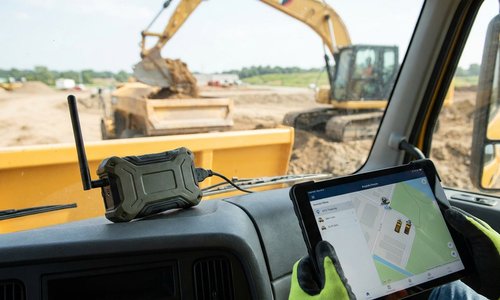
Ruptela Smart5 — the primary crane-fleet pick. Use the Smart5 as the first tracker to assess for a mobile crane fleet that needs a wired telematics device rather than a basic location-only unit. It suits operators standardising owned cranes, support trucks and low loaders within one fleet platform. Buy for crane fleets making a new hardware decision in 2026.
Teltonika FMC650 — the mixed-fleet wired option. The FMC650 is the second wired tracker to consider where crane plant sits alongside heavy vehicles and support assets, and the one to pick where dashcam pairing is in play. Consider for hire, civil and transport fleets with mixed equipment.
PROSTART® — the compliance layer. Digital pre-start checklists tied to immobilisation mean a crane flagged with a hydraulic fault or an incomplete rigging check simply will not start. This turns a tracker into a safety control, not just a reporting tool. Buy for crane fleets with documented pre-start obligations.
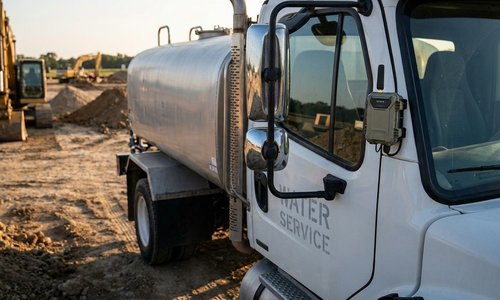
Ruptela Asset5 — the battery-powered attachment option. The Asset5 suits counterweights, outriggers, trailer-mounted rigging and other equipment without an ignition circuit. Track crane components that move independently of the crane itself instead of leaving them unaccounted for at a yard or site. Consider for fleets with detachable lifting gear or towed attachments.
Get crane tracking that reads J1939, not just GPS
See how Teletrack handles CANBUS, PROSTART® pre-starts and multi-vendor crane fleets — quoted against your actual crane and support-vehicle mix.
What to avoid
- Consumer OBD-II dongles. They're built for cars and light commercials. Plug one into a crane's J1939 network and you get location only — no boom data, no fault codes, no engine hours.
- Single-vendor trackers with no multi-vendor support. Fine on day one with a single-brand fleet. The day you add a hired-in crane from another vendor, you're running two systems and two logins.
- Trackers with no pre-start or immobilisation layer. Location data after an incident doesn't satisfy a WHS pre-start obligation. If the platform can't stop a defect-flagged crane from starting, it isn't solving the compliance problem — only the visibility problem.
Verdict comparison
- Ruptela Smart5 — CANBUS/J1939 fit confirmed per crane installation; immobilisation via PROSTART®. Best for owned crane and mixed-plant fleets. Buy.
- Teltonika FMC650 — CANBUS/J1939 fit confirmed per crane installation; immobilisation via PROSTART®. Best for mixed crane and support-vehicle fleets. Consider.
- PROSTART® — the add-on safety layer; pre-start and immobilisation built in. Best for fleets with pre-start obligations. Buy.
- Ruptela Asset5 — battery-powered asset tracking, no CANBUS or immobilisation. Best for counterweights, outriggers and towed gear. Consider.
GPS tracking for mobile cranes FAQs
What's the best GPS tracking for mobile cranes in 2026?
Ruptela Smart5 is the primary tracker to assess for mobile crane fleets in 2026. Pair it with PROSTART® where you need digital pre-start checks and immobilisation; assess the Teltonika FMC650 as the other wired option for mixed fleets.
Do mobile crane trackers need CANBUS support?
Yes, if you want fault codes and engine hour data rather than just a location pin. Standard OBD-II trackers built for cars can't read a crane's J1939 network, so you lose boom and engine diagnostics entirely.
Is PROSTART® required for crane pre-start checks?
PROSTART® isn't a legal requirement by name, but documented pre-start checks are a standard WHS expectation for crane operation. PROSTART®'s value is pairing that checklist with immobilisation so a flagged crane physically can't start.
How much does GPS tracking for mobile cranes cost in 2026?
Teletrack's platform subscription starts at $21.90 / asset / month + GST, month-to-month with no lock-in. PROSTART® is a per-device add-on, and hardware is purchased upfront per crane — crane-grade CANBUS devices price differently to basic vehicle trackers, so get a quote against your actual fleet rather than relying on a fleet-wide average.
Can one platform track cranes and support vehicles together?
Yes — Teletrack runs cranes, low loaders, service trucks and light vehicles under one login, with Ruptela and Teltonika hardware options for mixed fleets. No separate crane and vehicle tracking systems.
Does GPS tracking help prevent crane theft?
Location alerts and immobilisation reduce the window for unauthorised movement, particularly overnight or on unattended sites. Immobilisation tied to a pre-start check adds a second barrier beyond location alone.
Is Teletrack's data hosted in Australia?
Yes — Teletrack hosts its platform on AWS in Sydney, so fleet, driver and safety data stays in Australia, with support available during Australian business hours. That matters for high-risk lifting equipment when an incident or audit triggers a records request.
Do I need a licensed installer for crane GPS hardware?
CANBUS and J1939 tracker installation on cranes should go through an experienced auto-electrician familiar with the specific make and model's wiring. Incorrect installation risks both false fault-code readings and warranty issues on the crane itself — Teletrack supplies diagrams and can refer an installer in your area.
One last thing
The detail most fleet managers miss until it costs them: PROSTART®'s immobilisation is valuable because it's tied to the pre-start check, not to a schedule. A tracker that immobilises on a timer or a geofence breach is a security feature. One that immobilises because the crane failed its own pre-start check is a safety control — and in 2026, that distinction is what separates GPS tracking for mobile cranes from actual crane compliance.
See Teletrack on your crane fleet
30-minute walkthrough — J1939 diagnostics, PROSTART® pre-starts, geofencing for site moves — against your actual cranes and support vehicles.